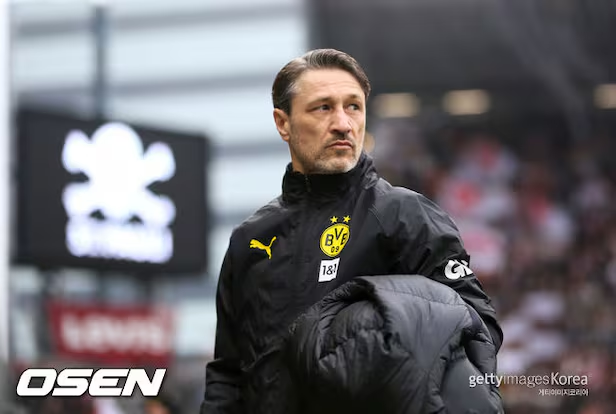
BREAKING: The Borussia Dortmund have fired Niko Kovac.
In a stunning turn of events that has sent shockwaves through the football world, Borussia Dortmund, one of Germany’s most storied clubs, announced the dismissal of head coach Niko Kovac. The decision marks a significant upheaval in the club’s recent trajectory and raises numerous questions about the team’s future, the reasons behind the firing, and the club’s ambitions moving forward.
This article delves deeply into the circumstances surrounding Kovac’s departure, analyzes the implications for Borussia Dortmund, explores the reactions from fans, players, and pundits, and considers who might be the club’s next managerial appointment.
—
## The Context: Borussia Dortmund’s Current Situation
Borussia Dortmund, often referred to as BVB, is renowned for its passionate fanbase, attractive style of play, and consistent challenge for titles in the Bundesliga and European competitions. The club has a rich history of developing young talent and competing at the highest levels.
However, recent seasons have seen a mix of success and disappointment. While Dortmund remains a formidable force domestically, their European campaigns have been inconsistent, and their league performances have sometimes fallen short of expectations.
Leading up to the firing, Dortmund’s season was characterized by a series of underwhelming results, tactical frustrations, and questions about the team’s direction under Kovac. The club’s management was reportedly dissatisfied with the team’s performance, especially in key matches, and there was mounting pressure from fans and stakeholders for a change.
### The Performance Under Kovac
Niko Kovac, appointed as Dortmund’s head coach at the start of the season, arrived with a reputation as a tactically astute manager with experience managing Bayern Munich and Eintracht Frankfurt. His appointment was seen as a strategic move to bring a disciplined, pragmatic approach to Dortmund’s attacking style.
However, the initial optimism was soon dampened by inconsistent results. The team struggled to find cohesion, especially in defense, and there were criticisms about the team’s tactical flexibility and motivation in crucial fixtures.
In particular, Dortmund’s recent performances in the Champions League and key Bundesliga matches raised red flags. The fans’ patience was wearing thin, and rumors of dissatisfaction within the club’s hierarchy grew louder.
—
## The Decision to Fire Niko Kovac
### Why Now?
The timing of the firing was surprising to many, given that Kovac’s tenure had not yet been long enough to fully evaluate. Reports suggest that the decision was driven by a combination of factors:
– **Poor Results:** Recent losses and underwhelming performances, especially in decisive matches, highlighted the team’s struggles.
– **Lack of Progress:** The club’s leadership believed that the team was not developing as expected, particularly in tactical adaptability and consistency.
– **Fan Dissatisfaction:** The supporters’ frustrations grew evident, with protests and critical chants during matches.
– **High Expectations:** Borussia Dortmund’s ambitions to challenge Bayern Munich and make deep runs in Europe placed immense pressure on the coaching staff.
### Internal Dynamics
Sources close to the club indicate that the decision was not taken lightly. There was a belief that a change was necessary to reignite the team’s passion and improve results. The management’s priority was to find a coach capable of galvanizing the squad and aligning with the club’s long-term vision.
### The Immediate Impact
The firing was officially announced via the club’s social media channels and official website. Dortmund’s sporting director, Sebastian Kehl, expressed his disappointment but emphasized the club’s commitment to competitiveness and excellence.
> “Niko Kovac is a professional and dedicated coach, but unfortunately, we have not seen the progress we expected. We thank him for his efforts and wish him the best in his future endeavors.”
The club swiftly moved to appoint an interim manager while initiating the search for a permanent replacement. Speculations about potential candidates flooded the media, ranging from experienced Bundesliga coaches to promising young tacticians.
—
## The Player and Staff Reactions
### Players’ Perspective
The players’ reactions to Kovac’s departure have been mixed. Some expressed disappointment, emphasizing Kovac’s professionalism and the positive aspects of his coaching style. Others acknowledged the need for change to achieve better results.
Key players were seen engaging with the media, with some praising the club’s decision to seek new leadership. The squad’s morale, already fragile during the season, was expected to be tested further as they adjusted to new management.
### Staff and Supporters
Support staff, including assistants and medical personnel, reportedly maintained a professional stance, focusing on preparing the team for upcoming fixtures. The fans, on the other hand, displayed a spectrum of emotions—ranging from relief to skepticism—highlighting the deep emotional investment in the club’s success.
—
## The Search for a New Manager
### Who Might Come Next?
The managerial vacancy at Borussia Dortmund has become one of the hottest topics in European football. The club’s management is under pressure to appoint a coach capable of restoring confidence and pushing for titles.
Some names circulating include:
– **Julian Nagelsmann:** The young, innovative coach known for his tactical flexibility and success with RB Leipzig and Bayern Munich.
– **Thomas Tuchel:** A former Dortmund coach, highly experienced in European competitions, with a proven track record at PSG and Chelsea.
– **Marco Rose:** A former Borussia Mönchengladbach coach, known for his attacking philosophy and recent success.
– **Lucien Favre:** The previous Dortmund coach, considered a safe pair of hands and familiar with the club’s ethos.
The decision will likely hinge on the club’s vision—whether they prioritize experience, youth development, or an attacking style of play.
### Challenges in the Transition
Changing managers mid-season is always fraught with risks. Integrating a new coach’s tactics, managing player expectations, and maintaining team cohesion are critical challenges. Borussia Dortmund’s management will need to act swiftly yet thoughtfully to ensure stability.
—
## Impact on the Team’s Performance
### Short-Term Outlook
The immediate aftermath of a coaching change often results in a period of adjustment. The team’s tactics, training routines, and morale will be influenced by the new manager’s approach.
The upcoming fixtures will be pivotal. The club’s performance in these matches could determine the success or failure of the managerial change. There’s hope that a fresh approach will infuse new energy into the squad.
### Long-Term Considerations
Dortmund’s philosophy has always centered on developing young talent and competing at the highest level. The new coach must align with the club’s ethos while implementing strategies that bring results.
The club’s ability to retain key players, attract new signings, and maintain a competitive edge will depend on how effectively they navigate this transition.
—
## Fans’ Reactions and Media Frenzy
### Fan Sentiment
Borussia Dortmund fans are known for their passionate support, but also for their vocal criticism when expectations are not met. The firing of Kovac sparked debates across social media platforms, fan forums, and sports channels.
Many supporters expressed hope that this change would herald a new era of success. Others voiced skepticism, warning that managerial upheaval alone may not resolve deeper issues within the club.
### Media Analysis
The media’s coverage has been extensive, with pundits analyzing the possible reasons for Kovac’s departure, the potential candidates for the role, and the implications for Dortmund’s season.
Some commentators praised the club’s bold move, citing the importance of decisive leadership. Others criticized the timing or questioned whether the club was rushing into a decision.
—
## Broader Implications for Borussia Dortmund
### Club’s Ambitions
Dortmund’s ambitions are clear: challenge Bayern Munich domestically and make a significant impact in European competitions. The managerial change indicates the club’s determination to accelerate progress and address shortcomings.
### Financial and Strategic Considerations
Firing a head coach involves financial costs, including compensation and potential contract buyouts. The club’s management will weigh these expenses against the benefits of fresh leadership.
Strategically, Dortmund aims to build a sustainable team that balances youth development with experienced players. The new manager’s philosophy will need to align with these goals.
### Future Prospects
While the immediate focus is on stabilizing the team and ensuring good results, the long-term vision remains centered on growth and success. The managerial appointment will be critical in shaping this trajectory.
If the club manages to find the right fit, it could set the stage for a new chapter of competitiveness and glory.
—
## Historical Context: Coaching Changes in Borussia Dortmund
Borussia Dortmund has a storied history of managerial changes, often reflecting the volatile nature of football management. Past coaches like Jürgen Klopp, Thomas Tuchel, and Lucien Favre have each left their mark, for better or worse.
Kovac’s departure continues this tradition, emphasizing that success in football is often cyclical and dependent on leadership, squad quality, and strategic vision.
—
## Conclusion: A Turning Point or a Short-Lived Change?
The firing of Niko Kovac by Borussia Dortmund is a pivotal moment that underscores the club’s relentless pursuit of excellence. While such decisions are always controversial and fraught with uncertainty, they also embody the club’s willingness to adapt and evolve.
Whether this move will lead to immediate improvements or become a contentious chapter in Dortmund’s history remains to be seen. What is clear is that Borussia Dortmund’s commitment to competing at the highest level is unwavering, and their next managerial appointment will be closely watched by fans and rivals alike.
In football, change is often the catalyst for renaissance. For Borussia Dortmund, this could be the beginning of a new chapter—one filled with hope, resilience, and the relentless pursuit of glory.
Borussia Dortmund, often referred to as BVB, is renowned for its passionate fanbase, attractive style of play, and consistent challenge for titles in the Bundesliga and European competitions. The club has a rich history of developing young talent and competing at the highest levels.
However, recent seasons have seen a mix of success and disappointment. While Dortmund remains a formidable force domestically, their European campaigns have been inconsistent, and their league performances have sometimes fallen short of expectations.
Leading up to the firing, Dortmund’s season was characterized by a series of underwhelming results, tactical frustrations, and questions about the team’s direction under Kovac. The club’s management was reportedly dissatisfied with the team’s performance, especially in key matches, and there was mounting pressure from fans and stakeholders for a change.
### The Performance Under Kovac
Niko Kovac, appointed as Dortmund’s head coach at the start of the season, arrived with a reputation as a tactically astute manager with experience managing Bayern Munich and Eintracht Frankfurt. His appointment was seen as a strategic move to bring a disciplined, pragmatic approach to Dortmund’s attacking style.
However, the initial optimism was soon dampened by inconsistent results. The team struggled to find cohesion, especially in defense, and there were criticisms about the team’s tactical flexibility and motivation in crucial fixtures.
In particular, Dortmund’s recent performances in the Champions League and key Bundesliga matches raised red flags. The fans’ patience was wearing thin, and rumors of dissatisfaction within the club’s hierarchy grew louder.
—
## The Decision to Fire Niko Kovac
### Why Now?
The timing of the firing was surprising to many, given that Kovac’s tenure had not yet been long enough to fully evaluate. Reports suggest that the decision was driven by a combination of factors:
– **Poor Results:** Recent losses and underwhelming performances, especially in decisive matches, highlighted the team’s struggles.
– **Lack of Progress:** The club’s leadership believed that the team was not developing as expected, particularly in tactical adaptability and consistency.
– **Fan Dissatisfaction:** The supporters’ frustrations grew evident, with protests and critical chants during matches.
– **High Expectations:** Borussia Dortmund’s ambitions to challenge Bayern Munich and make deep runs in Europe placed immense pressure on the coaching staff.
### Internal Dynamics
Sources close to the club indicate that the decision was not taken lightly. There was a belief that a change was necessary to reignite the team’s passion and improve results. The management’s priority was to find a coach capable of galvanizing the squad and aligning with the club’s long-term vision.
### The Immediate Impact
The firing was officially announced via the club’s social media channels and official website. Dortmund’s sporting director, Sebastian Kehl, expressed his disappointment but emphasized the club’s commitment to competitiveness and excellence.
> “Niko Kovac is a professional and dedicated coach, but unfortunately, we have not seen the progress we expected. We thank him for his efforts and wish him the best in his future endeavors.”
The club swiftly moved to appoint an interim manager while initiating the search for a permanent replacement. Speculations about potential candidates flooded the media, ranging from experienced Bundesliga coaches to promising young tacticians.
—
## The Player and Staff Reactions
### Players’ Perspective
The players’ reactions to Kovac’s departure have been mixed. Some expressed disappointment, emphasizing Kovac’s professionalism and the positive aspects of his coaching style. Others acknowledged the need for change to achieve better results.
Key players were seen engaging with the media, with some praising the club’s decision to seek new leadership. The squad’s morale, already fragile during the season, was expected to be tested further as they adjusted to new management.
### Staff and Supporters
Support staff, including assistants and medical personnel, reportedly maintained a professional stance, focusing on preparing the team for upcoming fixtures. The fans, on the other hand, displayed a spectrum of emotions—ranging from relief to skepticism—highlighting the deep emotional investment in the club’s success.
—
## The Search for a New Manager
### Who Might Come Next?
The managerial vacancy at Borussia Dortmund has become one of the hottest topics in European football. The club’s management is under pressure to appoint a coach capable of restoring confidence and pushing for titles.
Some names circulating include:
– **Julian Nagelsmann:** The young, innovative coach known for his tactical flexibility and success with RB Leipzig and Bayern Munich.
– **Thomas Tuchel:** A former Dortmund coach, highly experienced in European competitions, with a proven track record at PSG and Chelsea.
– **Marco Rose:** A former Borussia Mönchengladbach coach, known for his attacking philosophy and recent success.
– **Lucien Favre:** The previous Dortmund coach, considered a safe pair of hands and familiar with the club’s ethos.
The decision will likely hinge on the club’s vision—whether they prioritize experience, youth development, or an attacking style of play.
### Challenges in the Transition
Changing managers mid-season is always fraught with risks. Integrating a new coach’s tactics, managing player expectations, and maintaining team cohesion are critical challenges. Borussia Dortmund’s management will need to act swiftly yet thoughtfully to ensure stability.
—
## Impact on the Team’s Performance
### Short-Term Outlook
The immediate aftermath of a coaching change often results in a period of adjustment. The team’s tactics, training routines, and morale will be influenced by the new manager’s approach.
The upcoming fixtures will be pivotal. The club’s performance in these matches could determine the success or failure of the managerial change. There’s hope that a fresh approach will infuse new energy into the squad.
### Long-Term Considerations
Dortmund’s philosophy has always centered on developing young talent and competing at the highest level. The new coach must align with the club’s ethos while implementing strategies that bring results.
The club’s ability to retain key players, attract new signings, and maintain a competitive edge will depend on how effectively they navigate this transition.
—
## Fans’ Reactions and Media Frenzy
### Fan Sentiment
Borussia Dortmund fans are known for their passionate support, but also for their vocal criticism when expectations are not met. The firing of Kovac sparked debates across social media platforms, fan forums, and sports channels.
Many supporters expressed hope that this change would herald a new era of success. Others voiced skepticism, warning that managerial upheaval alone may not resolve deeper issues within the club.
### Media Analysis
The media’s coverage has been extensive, with pundits analyzing the possible reasons for Kovac’s departure, the potential candidates for the role, and the implications for Dortmund’s season.
Some commentators praised the club’s bold move, citing the importance of decisive leadership. Others criticized the timing or questioned whether the club was rushing into a decision.
—
## Broader Implications for Borussia Dortmund
### Club’s Ambitions
Dortmund’s ambitions are clear: challenge Bayern Munich domestically and make a significant impact in European competitions. The managerial change indicates the club’s determination to accelerate progress and address shortcomings.
### Financial and Strategic Considerations
Firing a head coach involves financial costs, including compensation and potential contract buyouts. The club’s management will weigh these expenses against the benefits of fresh leadership.
Strategically, Dortmund aims to build a sustainable team that balances youth development with experienced players. The new manager’s philosophy will need to align with these goals.
### Future Prospects
While the immediate focus is on stabilizing the team and ensuring good results, the long-term vision remains centered on growth and success. The managerial appointment will be critical in shaping this trajectory.
If the club manages to find the right fit, it could set the stage for a new chapter of competitiveness and glory.
—
## Historical Context: Coaching Changes in Borussia Dortmund
Borussia Dortmund has a storied history of managerial changes, often reflecting the volatile nature of football management. Past coaches like Jürgen Klopp, Thomas Tuchel, and Lucien Favre have each left their mark, for better or worse.
Kovac’s departure continues this tradition, emphasizing that success in football is often cyclical and dependent on leadership, squad quality, and strategic vision.
—
## Conclusion: A Turning Point or a Short-Lived Change?
The firing of Niko Kovac by Borussia Dortmund is a pivotal moment that underscores the club’s relentless pursuit of excellence. While such decisions are always controversial and fraught with uncertainty, they also embody the club’s willingness to adapt and evolve.
Whether this move will lead to immediate improvements or become a contentious chapter in Dortmund’s history remains to be seen. What is clear is that Borussia Dortmund’s commitment to competing at the highest level is unwavering, and their next managerial appointment will be closely watched by fans and rivals alike.
In football, change is often the catalyst for renaissance. For Borussia Dortmund, this could be the beginning of a new chapter—one filled with hope, resilience, and the relentless pursuit of glory.